
Ethylene Glycol in Used Engine Oil Analyser
High throughput GC headspace solution for fast and reliable ethylene glycol detection in used engine oil.
Ready to Elevate Your Analysis?
Efficient Ethylene Glycol Detection in Used Engine Oil
Ethylene glycol contamination in used engine oil is a critical indicator of coolant leakage and potential engine failure. Accurate and timely detection is essential for condition monitoring, preventive maintenance and failure analysis. Traditional methods such as ASTM D4291-98 are often labour intensive and time consuming, limiting sample throughput in routine laboratory environments.
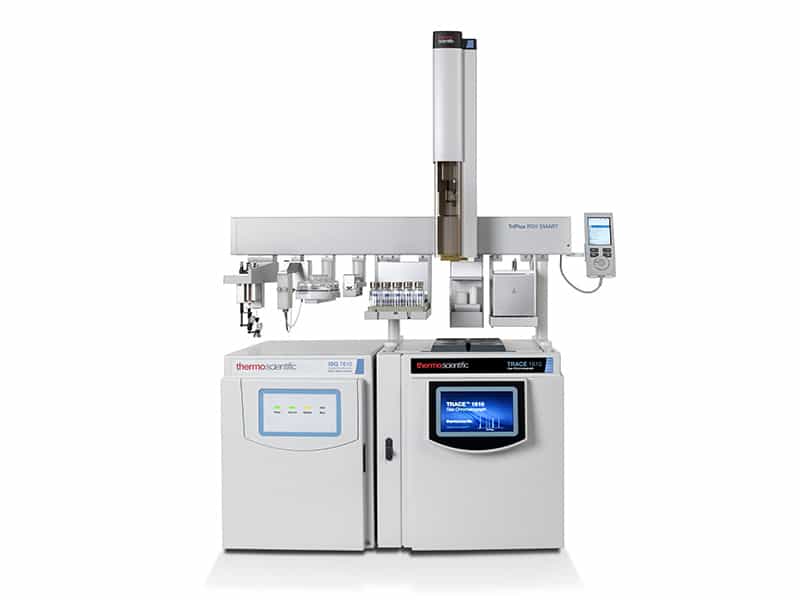
The GAS Ethylene Glycol in Used Engine Oil Analyser provides a high throughput alternative based on gas chromatography with headspace sampling. Ethylene glycol is chemically derivatised in the autosampler vial, increasing its volatility and reducing polarity. After controlled incubation, a defined headspace volume is injected using a Triplus headspace autosampler. The analysis is performed on a single channel Thermo Trace GC1600, offering a cost effective, robust and reproducible solution for routine ethylene glycol determination in used engine oils.
Applications
- Ethylene Glycol Detection in Used Engine Oil
Quantitative analysis of ethylene glycol contamination in used engine oil samples. - Coolant Leakage Identification
Detect glycol contamination as an indicator of engine coolant leaks and mechanical issues. - Automotive Maintenance and Diagnostics
Support preventive maintenance and failure analysis in automotive and industrial engines. - Laboratory Oil Analysis
Perform routine glycol testing in oil analysis laboratories with high sample throughput. - Alternative to ASTM D4291-98
Provide a faster and more efficient analytical method compared to traditional ASTM procedures.
Benefits
- Fast Analysis Time
Typical GC analysis time of 3 minutes with automated headspace sampling. - High Sample Throughput
Automated incubation and injection using Triplus headspace autosampler for efficient workflows. - Cost Effective Operation
Low cost per sample compared to traditional ASTM methods. - Reliable Quantification
Accurate results across a concentration range from 0.01% to 1% with good repeatability. - Simplified Methodology
Derivatisation and headspace sampling provide a robust and easy to implement analytical approach.