
Low Level Sulphur Analyser
Ultra-sensitive GC solutions for trace sulphur analysis down to ppb and sub-ppb levels,
delivering high selectivity, excellent linearity, and full compliance with international standards.
Ready to Elevate Your Analysis?
High-Precision Low Level Sulphur Analysis
Sulphur compounds such as H₂S, COS, mercaptans and thiophenes are highly corrosive, toxic, and harmful to downstream catalysts and processes. Accurate detection at very low concentration levels is therefore critical across gas, liquid, and liquefied hydrocarbon streams.
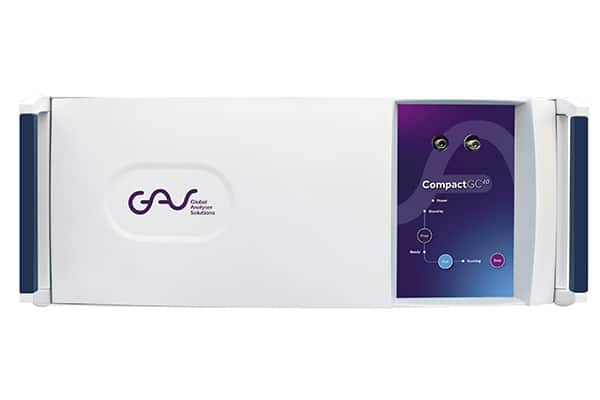
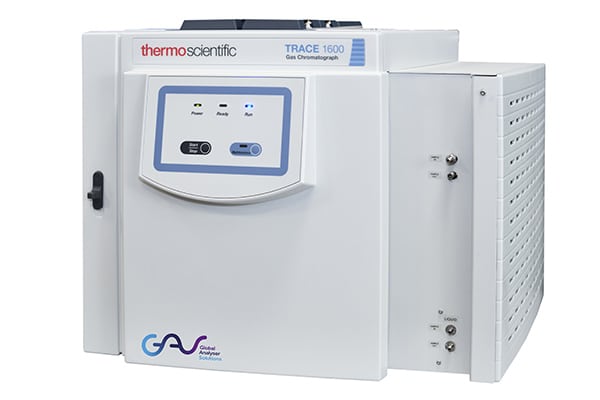
The GAS Low Level Sulphur Analyser provides a flexible, high-performance solution for sulphur component analysis using proven GC technology combined with FPD, PFPD, SCD, or GC-MS (AEI) detection. Depending on the required sensitivity, selectivity, and matrix, the analyser can be configured to achieve detection limits from ppm down to <1 ppb, while maintaining excellent repeatability and linearity over multiple decades.
All systems are designed for reliable long-term operation and full compliance with international standards including ASTM, ISO, GPA, UOP, DIN, and EN methods.
.
Applications
- Supported methods:
ASTM D6228, D5303, D5504, D3328, D4735, D5623, D7011, UOP791, ISO 19739, ISO 21087 - Trace Sulphur Analysis in Natural Gas and Fuel Gases
Detect sulphur components at ppb levels to protect catalysts,pipelines, and downstream processes. - Sulphur Determination in Liquid and Liquefied Hydrocarbons
Analyse LPG, propylene, diesel, and light petroleum liquids using GSV, LSV, SSL, or PTV injection techniques. - Olefin Feedstock Quality Control
Measure ultra-low levels of H₂S, COS (including arsine and phosphine) in ethylene and propylene to prevent catalyst poisoning in polymer production. - Refinery and Petrochemical Process Monitoring
Monitor sulphur impurities in refinery gas, hydrogen streams, and intermediate process gases. - Laboratory and Regulatory Compliance Testing
Perform validated sulphur analysis according to international standaards.
Benefits
- Flexible Detector Configurations
Choose FPD, PFPD, SCD, or MS depending on sensitivity and cost requirements – or combine detectors in a single system. - Ultra-Low Detection Limits
Achieve sulphur detection down to <1 ppb with GC-MS (AEI) for the most demanding applications. - High Selectivity and Linearity
Excellent equimolar response and linearity over up to four decades, even in complex hydrocarbon matrices. - Automated Calibration and Stable Results
- Optional Automatic Calibration Unit (ACU) with permeation tubes ensures accurate, reproducible multi-level calibration.
- Modular and Scalable Design
Available as a standalone analyser or combined with NGA, RGA, or other GAS analysers for an efficient footprint and lower total cost of ownership.

Downloads – Low Level Sulphur Analyser
Access brochures, technical datasheets, application notes, and software updates for Low Level Sulphur Analysers.
Low Level Sulphur Analyser – Flexible GC Solutions
Explore flexible GC configurations for low level sulphur analysis in gaseous, liquid, and liquefied petroleum samples. This document covers FPD, PFPD, SCD, and MS detector options, including integration with NGA and RGA systems for efficient sulphur monitoring.
Low Sulphur Analyser using SCD
Discover detailed performance data for ultra-low level sulphur analysis using Sulphur Chemiluminescence Detection (SCD). This application note describes ppb-level detection, excellent linearity, and automated calibration for sulphur analysis in natural gas and hydrocarbon streams.
H2S, COS, Arsine, Phosphine in Olefins
Learn how to detect H₂S, COS, arsine, and phosphine in ethylene and propylene at sub-ppb levels.
This application note details a GC-MS (AEI) solution with single-run analysis and automated calibration for critical olefin feedstock quality control.
CCUS Gas Analyser
CCUS (Carbon Capture, Utilisation and Storage) is considered a critical technology for achieving significant reductions in CO2 emissions, particularly in sectors that are difficult to decarbonise, such as heavy industry and fossil fuel-based power generation.